Choosing an IT partner is one of the bigger decisions a small business makes. The right provider keeps your team working, your data protected and your budget predictable. The wrong one leaves you waiting on tickets, guessing at invoices and finding gaps only after something breaks. If you are comparing managed IT services in Durham Region, from Ajax and Pickering to Whitby, Oshawa and Clarington, these are the questions that separate a real partner from a help desk with a logo.
What managed IT services should include
Managed IT means a provider looks after your technology for a predictable monthly fee, instead of billing you each time something breaks. A complete plan usually covers:
- Help desk support for staff by phone, email or chat
- 24/7 monitoring of computers, servers and network equipment
- Patching for operating systems and common business apps
- Endpoint protection, multi-factor authentication and backups
- Microsoft 365 administration and device management
- Onboarding and offboarding for new hires and leavers
- Regular reviews and a technology plan tied to your goals
If a proposal leaves out several of these, ask why, and ask what they cost as extras.
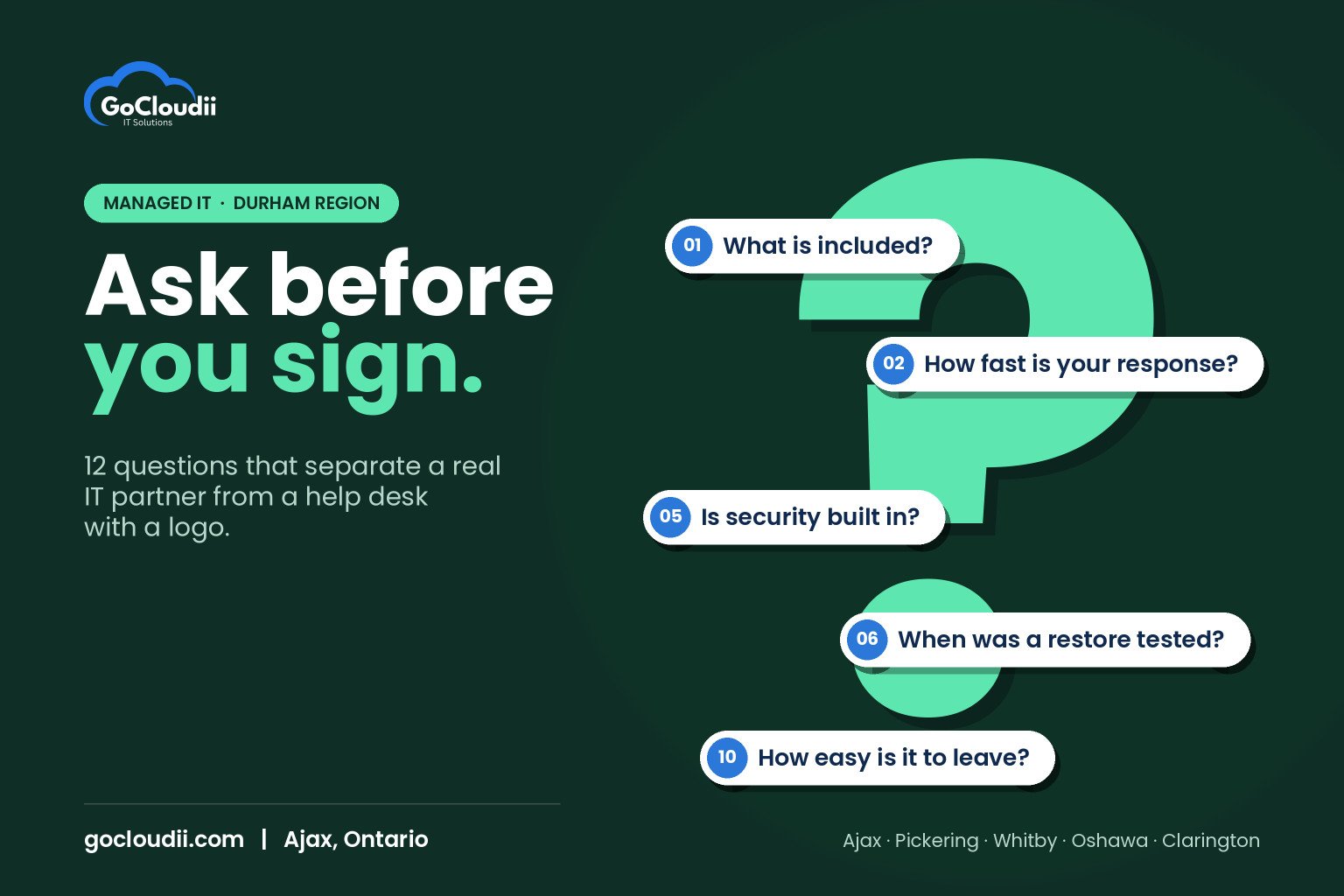
12 questions to ask managed IT providers in Durham Region
1. What exactly is included in the monthly fee?
Ask for a written list of what is covered and what is billed separately. Projects like office moves or migrations are often quoted on their own, which is fair, but day-to-day support should not come with surprise charges. For a closer look at pricing models, see our guide to managed IT services pricing in Ontario.
2. How fast do you respond, and how is that measured?
Response time and resolution time are different. Ask for their response targets for urgent and routine issues, how they define “urgent”, and whether they report on performance.
3. Who will actually help my staff?
Find out whether support comes from a local or Canadian team, whether you get a consistent group of technicians, and how after-hours emergencies are handled.
4. Can you come on site when needed?
Most issues can be fixed remotely, but some cannot. A provider based in or near Durham Region can reach an office in Ajax, Whitby or Oshawa far more quickly than one several hours away.
5. What security is included by default?
Security should be part of the plan, not an upsell. At a minimum, ask about multi-factor authentication, endpoint detection and response, email filtering, patching and staff awareness training. Our cybersecurity services page outlines what a strong baseline looks like.
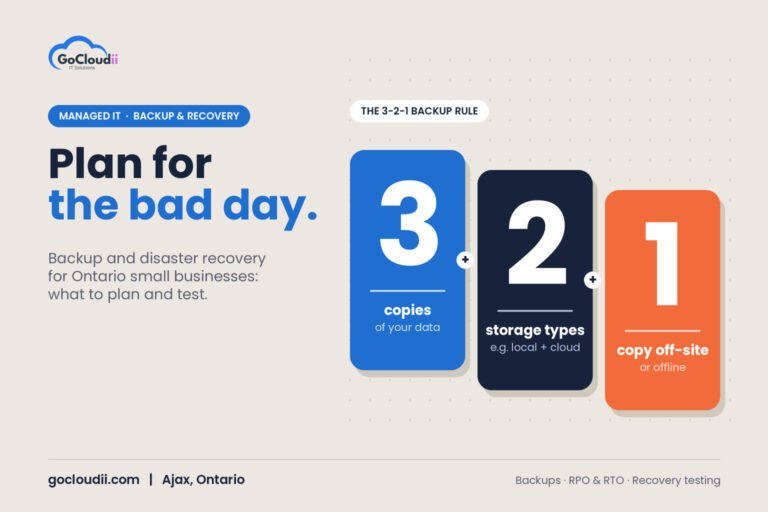
6. How do you back up our data and test recovery?
Backups only matter if they can be restored. Ask what is backed up, including Microsoft 365 mailboxes and files, how often, where the copies are stored and when a restore was last tested.
7. How do you handle Microsoft 365?
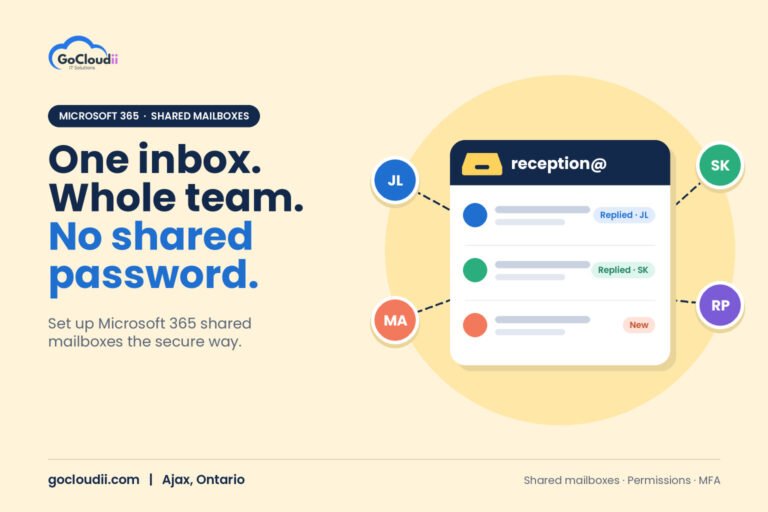
Most small offices run on Microsoft 365. Your provider should manage licences, security settings, user accounts and sharing permissions, and help you choose the right plan. Our Microsoft 365 solutions cover this work.
8. Do you understand our industry?
A dental office, a law firm and a non-profit have different software, privacy duties and busy seasons. Ask whether the provider supports similar organizations and understands obligations such as PHIPA for health information.
9. What does onboarding look like?
A good provider starts with a discovery period: documenting your devices, accounts, passwords, vendors and risks, then fixing urgent gaps. Ask how long onboarding takes and what you will receive at the end.
10. How long is the contract, and how do we leave?
Ask about the contract term, the notice period and what happens to your documentation and admin access if you move on. You should always keep ownership of your accounts and data.
11. How will we know what you are doing?
Look for regular reporting, such as monthly health reports and quarterly reviews. These show what was patched, what was blocked and what needs budget next year.
12. Can we speak with current clients?
References from similar businesses in the GTA or Durham Region tell you more than any sales presentation.
Red flags to watch for
- Vague answers about what is included
- No mention of security, backups or MFA in the base plan
- Long contracts with expensive exit terms
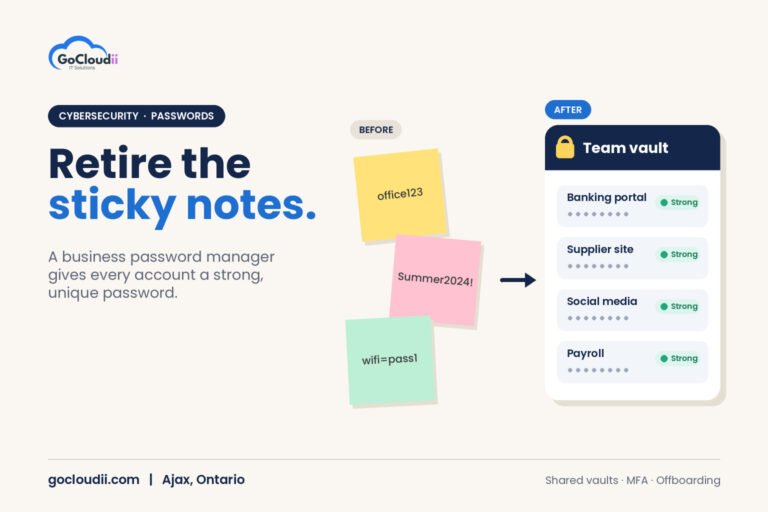
- The provider keeps admin passwords and will not share them
- No documentation or reporting
- Every fix depends on one person
Managed IT services in Durham Region: local vs remote providers
Remote-only providers can work well for some businesses, but a local or nearby partner brings practical advantages: on-site visits when hardware fails, familiarity with local internet providers and building setups, and the ability to meet in person for planning. For offices across Ajax, Pickering, Whitby, Oshawa and Clarington, it is worth weighing response time and on-site coverage alongside price.
Frequently asked questions
How much do managed IT services cost in Durham Region?
Most providers charge a monthly fee per user or per device. The total depends on the number of users, security requirements, Microsoft 365 licensing and support needs, so ask for a written quote based on your environment.
Is managed IT worth it for a business with fewer than 20 staff?
Often, yes. Small teams rarely have an in-house IT person, so problems land on the owner or office manager. Managed IT turns unpredictable repair bills into a fixed cost and adds security tools that would be expensive to manage alone.
Can we switch providers without disruption?
Yes, with planning. A new provider should coordinate the handover, collect admin credentials and documentation, and confirm backups and security tools are working before the old contract ends.
Talk to a Durham Region IT partner
GoCloudii is based in Ajax and supports businesses across Durham Region and the GTA. Our managed IT services include unlimited remote help desk support, 24/7 monitoring, device management, endpoint protection and daily cloud backup for a flat monthly fee per user, with a response within 1 business day and no long lock-in. Contact us to book a free consultation and put these 12 questions to us directly.